


Description
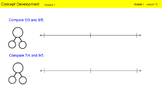
This SMART notebook lesson was adapted from Engage New York Fourth Grade Math, Module 5. It is strategically designed to provide ease of lesson presentation. Fluency Practice, Application Problem, and Concept Development are included.
Report this resource to TPT
Reported resources will be reviewed by our team. Report this resource to let us know if this resource violates TPT's content guidelines.

Highlights
Digital downloads

Grades
4th


Standards
CCSS4.NF.A.2
Pages
12
Description
This SMART notebook lesson was adapted from Engage New York Fourth Grade Math, Module 5. It is strategically designed to provide ease of lesson presentation. Fluency Practice, Application Problem, and Concept Development are included.
Report this resource to TPT
Reported resources will be reviewed by our team. Report this resource to let us know if this resource violates TPT's content guidelines.
Reviews
All verified TPT purchases
Love these lessons!
Questions & Answers
Loading
Standards
to see state-specific standards (only available in the US).
CCSS4.NF.A.2
Compare two fractions with different numerators and different denominators, e.g., by creating common denominators or numerators, or by comparing to a benchmark fraction such as 1/2. Recognize that comparisons are valid only when the two fractions refer to the same whole. Record the results of comparisons with symbols >, =, or <, and justify the conclusions, e.g., by using a visual fraction model.
Loading
