
Percent Increase and Decrease Quiz
150+ results
Filters
Grade
Subject
Format
Resource type
Standard

Pandemic Outbreak Dice Lab Simulation 6th-8th Science | Analyze Data Graphing

Epidemiology • Probability • Graphing • Exponential Growth • Data Analysis Bring real-world science and math connections into your classroom with this highly engaging Pandemic Outbreak Dice Lab Simulation! Students model the spread of an infectious disease through a population of 1,000,000 people while analyzing how probability, public health responses, human behavior, and random events influence outbreaks over time. Using dice rolls to simulate real-world pandemic events, students calculate p
5th - 9th
Biology, Environment, Graphing
NGSS
MS-LS2-2
, MS-LS2-1

Carbon Footprint Dice Lab Simulation 6th-8th Science | Analyze Data Graphing
Carbon Footprint • Climate Change • Sustainability • Probability • Graphing • Data AnalysisBring environmental science, probability, and graphing together with this highly engaging Carbon Footprint Dice Lab Simulation! Students roll dice to model how everyday household choices can increase or reduce a carbon footprint, record carbon unit changes, graph their results, and analyze how transportation, energy use, food choices, waste, and random events affect environmental impact over time. Using d
5th - 9th
Earth Sciences, Environment, Graphing
NGSS
MS-ESS3-5
, MS-ESS3-3

Desert Biodiversity Board Game | Food Web & Ecosystem Science Activity

Engage your students with this interactive board game designed to explore how various events affect the biodiversity of organisms in a desert food web. Ideal for Earth Day activities or as part of your environmental science curriculum, this game offers a dynamic and educational way to understand desert ecosystems. How to PlaySetup: Each player places their game piece on the starting point of the desert game board.Draw Cards: Players take turns drawing one of the 33 desert-themed event cards.
3rd - 6th
Biology, Environment, Science
NGSS
MS-LS2-3
, 5-LS2-1
, MS-LS2-4

Escape the Cave! A Rocks and Minerals Digital Escape Room & Quiz | NO PREP

Are you looking for a fun way for your students to review rocks and minerals prior to an exam? Or do you need an introduction to the topic? Are you tired of the same puzzles being used over and over? This store offers unique and creative puzzles for each digital escape room offered. This is a ready-to-go interactive Internet activity that features a cave theme where students can learn important information about rocks and minerals, complete content-related puzzles, and then race to escape t
5th - 11th
Earth Sciences, Environment, Other (Science)

United States Ecosystems & Biomes | Interactive Map, Wildlife & Quiz Activity

Explore the rich diversity of America's ecosystems with this map-based learning tool designed for teachers, students, and homeschoolers.🌎 Dive into the major ecological regions and biomes of the United States: deserts, forests, wetlands, tundras, grasslands, and more, through a dynamic, visual experience.✅ Includes a downloadable, standalone HTML file, no installation required. Just open it in any browser to explore!✅ Works great for demonstrations or independent student use on desktops, laptop
5th - 7th
Environment, Geography

Light Microscope Quiz & Answer Sheet

Students will label parts of the microscope and define the purpose of each part below. Great quiz, or worksheet, while introducing the microscope. This goes great with our INTRODUCTION TO THE MICROSCOPE PACKAGE! https://www.teacherspayteachers.com/Product/Introduction-to-the-Microscope-2019-4798849
5th - 12th, Adult Education
Biology, Environment, General Science

Plant Needs & Photosynthesis Unit | 5th Grade NGSS Plants Experiment

Do plants need air, water, and soil? This phenomenon-based unit helps students investigate the needs of plants and photosynthesis with hands-on investigations, vocabulary support, a reading passage, and modeling. ▶ We'll guide you each step of the way with texts, examples, photos, student worksheets, and user-friendly directions.9 DAYS OF LESSONSEngage: Phenomenon Intro Video, start Class CER, annual flowers observation (air vs. no air)Explore: Green Onion InvestigationsExplain: Text and video
4th - 5th
Earth Sciences, Environment, Science
NGSS
5-LS1-1

Weather & Climate Unit — Future Meteorologist Unit

8-Day Middle School Science Plan (With Slides, Lab, and Project) Grades: 6th–8th Subject: Earth & Environmental Science / NGSS Aligned Duration: 8-10 class periods (45–60 minutes each) Includes: 8 editable slideshows 1 hands-on tornado lab 1 group meteorology project QuizWorksheetsAnswer keyOverview Help your students discover how weather really works with this 8-day, fully scaffolded unit that blends NGSS science standards with hands-on STEM learning and real-world data analysis. Stude
4th - 9th
Earth Sciences, Environment, General Science

BACK TO SCHOOL! Microscope Mystery Lab: The Great Ferret Escape MS & HS

Your students will love this hands-on forensic science investigation as they use their microscope skills to analyze mysterious residues from a classroom “crime scene” and crack the case! ✨ What’s Inside: ✅ Differentiated worksheets ✅ Next-day quiz in 2 formats (with answer key + rubric) ✅ Teacher notes packed with tips for differentiation & extension ✅ Full answer key Perfect for upper elementary through college—this lab works as an extension activity, science centers, or RTI. No matter
4th - 12th, Adult Education, Higher Education
Biology, Environment, Forensics
NGSS
MS-ETS1-2
, MS-ETS1-4
, MS-ETS1-1
+1

Analyze predator prey data tables and graphs virtual remote lab activity

This resource will allow students to calculate a change of deer population as the wolf numbers rebounded in the mid-west between the years 2000-2010. Students will observe and describe the population limiting factors before the wolf resurgent and after. Students' calculation will alter the graph to illustrate the fall of the deer population as predation increases as well analyze a predator prey graph to compare the relationship between the two populations.
5th - 10th
Biology, Earth Sciences, Environment

Owl and Owl Pellet Dissection Resource Package

If you're planning on dissecting owl pellets with your class, consider checking out the preview pictures to see if these resources are a good fit for your needs! This package provides you and your students with a bundled series of informational text resources, work sheets, and guided activities. I've also included detailed teacher notes that provide answers to the guiding questions. In this bundle you'll find: "Pre-dissection" work sheets and walk throughs that explore owl characteristics an
3rd - 9th
Biology, Environment, Science

Eunice Newton Foote & Greenhouse Gasses Experiment

Students learn about Eunice Newton Foote, the first person to describe how an increase in carbon dioxide might affect Earth's temperature. As a demo, replicate her experiment. While you wait for the air/gas inside the bottles to heat up, watch a BrainPop on greenhouse gases & read a little about ENF's life and work. Materials needed: 2 plastic water bottles, with the labels removed and holes punched or drilled into the tops - I used a small drill bit on a hand drill1 heat lamp2 temperature pr
4th - 10th
Environment, General Science, Science
CCSS, NGSS
RST.6-8.9
, MS-ESS3-5

RAINFOREST BIODIVERSITY BOARD GAME-Events that Improve or Destroy Biodiversity
This engaging and interactive board game helps students explore the events that either increase or reduce biodiversity in a rainforest jungle food web. Perfect for Earth Day or environmental science units, this game offers a fun, hands-on approach to learning about ecosystems and biodiversity. It also serves as a great research tool, prompting students to think critically about real-world ecological events. How to Play:2-3 Player Game: Students take turns drawing cards that describe various e
3rd - 6th
Biology, Environment, Science
NGSS
MS-LS2-3
, 5-LS2-1
, MS-LS2-4

Building a Model Landfill
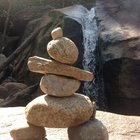
This activity increases awareness about the amount of waste that we produces and then provides students with an opportunity to model what happens to various materials in a landfill. The activity includes the following sections:
1. Introduction
2. Waste Categories
3. Model Landfill Building
4. Data Collection
5th - 12th
Environment, Science

Environmental Impact of Pollution on a River - Activity/Lab + Post Lab Questions

As human populations have increased and land uses have changed, many of our rivers have become polluted. This interactive activity models that just as we each contribute to the problem of pollution, we must also be a part of the solution. For this activity, you will read a story about the settlement of the Potomac River (or adapt to your own local river). Each student will be assigned a role in the community and given a prepared canister/container of various types of "pollution." When their par
1st - 10th
Earth Sciences, Environment, General Science
NGSS
HS-ESS3-3
, 5-ESS3-1
, MS-ESS3-4
+3

Lets Talk Trash

Students are introduced to marine debris and participate in a role-playing exercise acting as beachgoers, seafarers (or crew members on a boat), homeowners, factory managers, or managers of a waste disposal company. Students discuss their role and how they can manage or prevent marine debris. Students then make a commitment to decreasing their plastic consumption by signing the NAMEPA Plastics Pledge.
K - 5th
Earth Sciences, Environment, Science
NGSS
K-2-ETS1-3
, K-2-ETS1-1
, K-LS1-1
+2

New York State Living Environment Regents Lab Activity: The Beaks of Finches
Students will e the following key points in this lab activity and work in pairs to complete the procedure outlined in the document. Explore how Species evolve over time. Evolution is a result of the interactions between (1) The potential for a species to increase its population, (2) Genetic variation of offspring due to mutation and genetic recombination, (3) A limited amount of resources in the environment (ex. food, space, mates, etc.), and (4) Selection by the environment of those individua
5th - 11th
Biology, Environment, Science

Biome in a Baggie

This NGSS aligned lab is simple, yet incorporates a variety of skills and topics. Students use this lab to model the growth of plants in different biomes. Biogeochemical cycles and limiting factors are also explored throughout the lab observations. Students create their own tables for data collection and practice identifying quantitative and qualitative data. Pre-lab and post lab questions activate prior knowledge as well as reinforce concepts.
This is best suited for grades 5-8, but can be
5th - 9th
Biology, Environment, General Science

Biome Biodiversity Bean Lab

In this 8-station lab activity, students place beans (which represent sunlight and water) on "Biome Placemats" in order to support the diversity of life that exists in each biome. Each station gets a specific number of beans, which represent the limited amount of sunlight and rainfall that each biome receives. The learning objective is for students to experience through inquiry that more abiotic factors (sunlight and rainfall beans) are able to support more diversity of life (increase biodivers
5th - 8th
Biology, Environment, Science

Limiting Factor Pictionary- NO PREP!

I’ve tested this Limiting Factors Pictionary activity in my own classroom as an introduction to limiting factors, and it was a huge hit. Students were fully engaged, laughing, drawing, guessing, and most importantly learning. It’s a great way to reinforce or introduce science vocabulary and concepts in a fun, low-prep way. This game works well as a: Review activityIntroductory lessonFriday fun lessonYou can play for about 20-25 minutes, depending on your group size and how many rounds you play.
5th - 9th
Biology, Environment, General Science

Climate Change Ice Core Lab

This activity is a short easy experiment to help your students understand how scientists know that the carbon dioxide levels have increased over the years. Day 1 of the lab consists of reading a letter from the Antarctic University Research Team asking your students for help in determining the level of Carbon Dioxide in an ice core sample. The next two days of the lab consist of your students working in partners determining the level of Carbon Dioxide in ice samples that were provided by the res
4th - 12th
Biology, Earth Sciences, Environment
NGSS
HS-ESS3-5
, HS-ESS2-2
Also included in: Climate Change Unit Lab Bundle

Tusk vs. Tuskless Lab

Students investigate the impact that poaching has on a population of "elephants" (represented by beans). One color represents elephants with tusks, and the other represents a variety without tusks. Reaching into a bag filled with an equal number of beans, students select one elephant at a time and determine if it is poaches or if it reproduces to increase the native population.
4th - 8th
Biology, Environment, General Science

Food Chain and Energy Flow STEM Activity for Biomes and Ecosystems Grades 4•5•6

How does energy move through a food chain? Build a colorful energy pyramid to find out! Stack grass, rabbits, and a wolf to see who provides the most energy—and who creates the least. Explore why energy decreases at each level and how this shapes food webs in nature. What's Included:✅ Task Card instructions ✅ Student Sheet for capturing observations (answers included) ✅ Teacher Notes with prep and set up suggestions & explanations. ✅ Claim, Evidence, Reasoning Cards & Instructions This Resou
4th - 6th
Biology, Environment
NGSS
5-PS3-1

Grow a Bean Plant – Science Observation Journal (Grades 3–6) | Labortatory

This hands-on science resource guides students through the fascinating process of germination and plant growth by growing a simple bean seed. Perfect for grades 3–6, this packet includes over 10 pages of instructions, explanations, observation logs, and a built-in quiz.Students will plant a bean seed and observe its growth over several days or weeks. They’ll learn about key concepts like germination, roots, stems, leaves, photosynthesis, and plant structure. The included vocabulary pages,
3rd - 6th
Biology, Chemistry, Environment
Showing 1-24 of 150+ results

TPT is the largest marketplace for PreK-12 resources, powered by a community of educators.
IXL family of brands