


What others say

Description
DISTANCE LEARNING COMPATIBLE Need more practice for your students to read and interpret experimental designs? This project provides 5 unique experimental designs that students have to read and interpret. I wrote them myself when I kept finding the same boring, simple examples in textbooks and wanted something more engaging and challenging for my students.
This resource includes both a PDF for printing out a physical copy AND a fully editable Google Doc link for remote or distance learning! Assign the Google doc to your students, and they can type their answers directly into the boxes and submit their work digitally. They can also create experimental design diagrams in Google Docs using Insert-Image (kids figure out how to do this quite quickly, as I learned this year!) Or if you prefer, print out the PDF to pass out to your students for in person work.
This packet includes the following:
- AP exam model problem
- Five unique fictional experiments that students must read and analyze to identify:
- explanatory and response variables
- treatment
- experimental units
- randomization
- replication
- control
- blocking
- Space for students to diagram each experiment
- Complete answer key
- Student and teacher instructions for use as a jigsaw and a stations activity
I created this project as a way to reinforce the difference between control and blocking, which my students struggled to grasp, and to prepare students to create their own experimental designs. My class usually spends a day on an introduction to experimental design theory (a lecture-style class), a day using this activity to analyze experiments, and a final two days writing and critiquing their own experimental designs given a real-world question of interest. This schedule allows my students to climb Bloom's taxonomy throughout the week, eventually culminating in a thorough understanding of the complexities of both creating and critiquing experiments. This lesson is a critical bridge between basic and deep understanding of the elements of experimental design.
The assignment can be implemented many ways. I have used both a jigsaw and a stations approach over the years, and have listed teacher and student instructions for these two approaches. If your prefer, you can always give this as a more traditional assignment or assessment.
You may also be interested in my other AP Statistics projects:
1) Data Displays Project
2) M&M Sampling Distribution Project
3) Football Statistics Probability Project
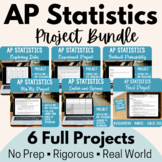
Or purchase all 4 at a discounted price in the following bundle: AP Statistics Project Bundle - Includes Digital Versions!
Follow my store to get notifications about new products and sales
Highlights


What others say
Save even more with bundles


Description
DISTANCE LEARNING COMPATIBLE Need more practice for your students to read and interpret experimental designs? This project provides 5 unique experimental designs that students have to read and interpret. I wrote them myself when I kept finding the same boring, simple examples in textbooks and wanted something more engaging and challenging for my students.
This resource includes both a PDF for printing out a physical copy AND a fully editable Google Doc link for remote or distance learning! Assign the Google doc to your students, and they can type their answers directly into the boxes and submit their work digitally. They can also create experimental design diagrams in Google Docs using Insert-Image (kids figure out how to do this quite quickly, as I learned this year!) Or if you prefer, print out the PDF to pass out to your students for in person work.
This packet includes the following:
- AP exam model problem
- Five unique fictional experiments that students must read and analyze to identify:
- explanatory and response variables
- treatment
- experimental units
- randomization
- replication
- control
- blocking
- Space for students to diagram each experiment
- Complete answer key
- Student and teacher instructions for use as a jigsaw and a stations activity
I created this project as a way to reinforce the difference between control and blocking, which my students struggled to grasp, and to prepare students to create their own experimental designs. My class usually spends a day on an introduction to experimental design theory (a lecture-style class), a day using this activity to analyze experiments, and a final two days writing and critiquing their own experimental designs given a real-world question of interest. This schedule allows my students to climb Bloom's taxonomy throughout the week, eventually culminating in a thorough understanding of the complexities of both creating and critiquing experiments. This lesson is a critical bridge between basic and deep understanding of the elements of experimental design.
The assignment can be implemented many ways. I have used both a jigsaw and a stations approach over the years, and have listed teacher and student instructions for these two approaches. If your prefer, you can always give this as a more traditional assignment or assessment.
You may also be interested in my other AP Statistics projects:
1) Data Displays Project
2) M&M Sampling Distribution Project
3) Football Statistics Probability Project
Or purchase all 4 at a discounted price in the following bundle: AP Statistics Project Bundle - Includes Digital Versions!
Follow my store to get notifications about new products and sales
Reviews

