


Description
This bundle includes all of my graphing activities and problem sets. The focus of each of these activities is two-fold:
1) Plotting points correctly
2) Understanding the meaning
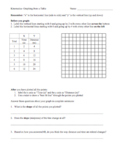
Most of these activities are paper-and-pencil only. "Graphing Real World Data" starts with a hands-on class activity of timing a bowling ball's roll across the room to show students a concrete example of an object moving and then constructing a graph from the motion to teach the students that a line diagonally upward on the page is an object moving away from a chosen origin and NOT an object moving up a hill (many of my younger students have this misconception) So, for "Graphing Real World Data", you will need to obtain a hill, ball, meterstick, tape, and stop watches.
I use most of these with all of my general science and physics classes. However, "Interpreting velocity vs time graphs" is really only for my upper-level classes.

Highlights


Save even more with bundles

Description
This bundle includes all of my graphing activities and problem sets. The focus of each of these activities is two-fold:
1) Plotting points correctly
2) Understanding the meaning
Most of these activities are paper-and-pencil only. "Graphing Real World Data" starts with a hands-on class activity of timing a bowling ball's roll across the room to show students a concrete example of an object moving and then constructing a graph from the motion to teach the students that a line diagonally upward on the page is an object moving away from a chosen origin and NOT an object moving up a hill (many of my younger students have this misconception) So, for "Graphing Real World Data", you will need to obtain a hill, ball, meterstick, tape, and stop watches.
I use most of these with all of my general science and physics classes. However, "Interpreting velocity vs time graphs" is really only for my upper-level classes.
