


What others say

Description
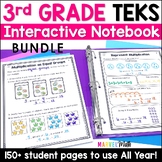
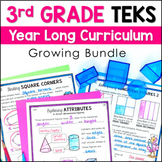
You and your students will love this Easy-to-Use 3rd Grade Fractions Interactive Notebook! There are engaging pages to teach identifying unit fractions, comparing unit fractions, equivalent fractions, comparing fractions with the same numerator, comparing fractions with the same denominator and much more! This notebook becomes a perfect reference tool for students.
Take the guesswork out of planning and finding everything you need to teach in your 3rd Grade Fractions Unit. The pages in this Fractions Interactive Notebook are designed to present all of the TEKS and Common Core Standards for this topic in a logical and thorough process.
What's Included:
- Student Cover and Table of Contents for Easy Organization
- 27 student pages
- Vocabulary section
- Complete Teacher Key
Great ways to use these Fractions Interactive Notebook Pages:
- Whole Class Lessons
- Small Group Lessons
- Math Stations
- Tutoring
- As a Student Reference Tool when the pages are complete
3rd Grade Fractions Topics include:
- Introduction to Fractions
- Identifying Unit Fractions
- Comparing Unit Fractions
- Identifying Fractions
- Naming and Representing Fractions
- Fractions Equal to One Whole
- Fractions of Sets
- Composing and Decomposing Fractions
- Equivalent Fractions with models
- Fractions on a Number Line
- Equivalent Fractions on a Number Line
- Comparing Fractions with the same Numerator
- Comparing Fractions with the Same Denominator
- Reason to Compare Fractions
- Fractional Fair Shares
Standards Alignment:
TEKS
3.3A: Represent fractions greater than zero and less than or equal to one with denominators of 2, 3, 4, 6, and 8 using concrete objects and pictorial models, including strip diagrams and number lines.
3.3B: Determine the corresponding fraction greater than zero and less than or equal to one with denominators of 2, 3, 4, 6, and 8 given a specified point on a number line.
3.3C: Explain that the unit fraction 1/b represents the quantity formed by one part of a whole that has been partitioned into b equal parts where b is a non‐zero whole number.
3.3D: Compose and decompose a fraction a/b with a numerator greater than zero and less than or equal to b as a sum of parts 1/b.
3.3E: Solve problems involving partitioning an object or a set of objects among two or more recipients using pictorial representations of fractions with denominators of 2, 3, 4, 6, and 8.
3.3F: Represent equivalent fractions with denominators of 2, 3, 4, 6, and 8 using a variety of objects and pictorial models, including number lines.
3.3G: Explain that two fractions are equivalent if and only if they are both represented by the same point on the number line or represent the same portion of a same size whole for an area model.
3.3H: Compare two fractions having the same numerator or denominator in problems by reasoning about their sizes and justifying the conclusion using symbols, words, objects, and pictorial models.
3.7A: Represent fractions of halves, fourths, and eighths as distances from zero on a number line.
Common Core
3.NF.A.1: Understand a fraction 1/b as the quantity formed by 1 part when a whole is partitioned into b equal parts; understand a fraction a/b as the quantity formed by a parts of size 1/b.
3.NF.A.2: Understand a fraction as a number on the number line; represent fractions on a number line diagram.
3.NF.A.2a: Represent a fraction 1/b on a number line diagram by defining the interval from 0 to 1 as the whole and partitioning it into b equal parts. Recognize that each part has size 1/b and that the endpoint of the part based at 0 locates the number 1/b on the number line.
3.NF.A.2b: Represent a fraction a/b on a number line diagram by marking off a lengths 1/b from 0. Recognize that the resulting interval has size a/b and that its endpoint locates the number a/b on the number line.
3.NF.A.3: Explain equivalence of fractions in special cases, and compare fractions by reasoning about their size.
3.NF.A.3a: Understand two fractions as equivalent (equal) if they are the same size, or the same point on a number line.
3.NF.A.3b: Recognize and generate simple equivalent fractions, e.g., 1/2 = 2/4, 4/6 = 2/3). Explain why the fractions are equivalent, e.g., by using a visual fraction model.
3.NF.A.3c: Express whole numbers as fractions, and recognize fractions that are equivalent to whole numbers. Examples: Express 3 in the form 3 = 3/1; recognize that 6/1 = 6; locate 4/4 and 1 at the same point of a number line diagram.
3.NF.A.3d: Compare two fractions with the same numerator or the same denominator by reasoning about their size. Recognize that comparisons are valid only when the two fractions refer to the same whole. Record the results of comparisons with the symbols >, =, or <, and justify the conclusions, e.g., by using a visual fraction model.
___________________________________
Copyright © Marvel Math
Permission to copy for single classroom use only.
Please purchase additional licenses if you intend to share this product.
Identifying & Comparing Unit Fractions, Equivalent Fractions & More - Notebook

Highlights


What others say
Save even more with bundles

Description
You and your students will love this Easy-to-Use 3rd Grade Fractions Interactive Notebook! There are engaging pages to teach identifying unit fractions, comparing unit fractions, equivalent fractions, comparing fractions with the same numerator, comparing fractions with the same denominator and much more! This notebook becomes a perfect reference tool for students.
Take the guesswork out of planning and finding everything you need to teach in your 3rd Grade Fractions Unit. The pages in this Fractions Interactive Notebook are designed to present all of the TEKS and Common Core Standards for this topic in a logical and thorough process.
What's Included:
- Student Cover and Table of Contents for Easy Organization
- 27 student pages
- Vocabulary section
- Complete Teacher Key
Great ways to use these Fractions Interactive Notebook Pages:
- Whole Class Lessons
- Small Group Lessons
- Math Stations
- Tutoring
- As a Student Reference Tool when the pages are complete
3rd Grade Fractions Topics include:
- Introduction to Fractions
- Identifying Unit Fractions
- Comparing Unit Fractions
- Identifying Fractions
- Naming and Representing Fractions
- Fractions Equal to One Whole
- Fractions of Sets
- Composing and Decomposing Fractions
- Equivalent Fractions with models
- Fractions on a Number Line
- Equivalent Fractions on a Number Line
- Comparing Fractions with the same Numerator
- Comparing Fractions with the Same Denominator
- Reason to Compare Fractions
- Fractional Fair Shares
Standards Alignment:
TEKS
3.3A: Represent fractions greater than zero and less than or equal to one with denominators of 2, 3, 4, 6, and 8 using concrete objects and pictorial models, including strip diagrams and number lines.
3.3B: Determine the corresponding fraction greater than zero and less than or equal to one with denominators of 2, 3, 4, 6, and 8 given a specified point on a number line.
3.3C: Explain that the unit fraction 1/b represents the quantity formed by one part of a whole that has been partitioned into b equal parts where b is a non‐zero whole number.
3.3D: Compose and decompose a fraction a/b with a numerator greater than zero and less than or equal to b as a sum of parts 1/b.
3.3E: Solve problems involving partitioning an object or a set of objects among two or more recipients using pictorial representations of fractions with denominators of 2, 3, 4, 6, and 8.
3.3F: Represent equivalent fractions with denominators of 2, 3, 4, 6, and 8 using a variety of objects and pictorial models, including number lines.
3.3G: Explain that two fractions are equivalent if and only if they are both represented by the same point on the number line or represent the same portion of a same size whole for an area model.
3.3H: Compare two fractions having the same numerator or denominator in problems by reasoning about their sizes and justifying the conclusion using symbols, words, objects, and pictorial models.
3.7A: Represent fractions of halves, fourths, and eighths as distances from zero on a number line.
Common Core
3.NF.A.1: Understand a fraction 1/b as the quantity formed by 1 part when a whole is partitioned into b equal parts; understand a fraction a/b as the quantity formed by a parts of size 1/b.
3.NF.A.2: Understand a fraction as a number on the number line; represent fractions on a number line diagram.
3.NF.A.2a: Represent a fraction 1/b on a number line diagram by defining the interval from 0 to 1 as the whole and partitioning it into b equal parts. Recognize that each part has size 1/b and that the endpoint of the part based at 0 locates the number 1/b on the number line.
3.NF.A.2b: Represent a fraction a/b on a number line diagram by marking off a lengths 1/b from 0. Recognize that the resulting interval has size a/b and that its endpoint locates the number a/b on the number line.
3.NF.A.3: Explain equivalence of fractions in special cases, and compare fractions by reasoning about their size.
3.NF.A.3a: Understand two fractions as equivalent (equal) if they are the same size, or the same point on a number line.
3.NF.A.3b: Recognize and generate simple equivalent fractions, e.g., 1/2 = 2/4, 4/6 = 2/3). Explain why the fractions are equivalent, e.g., by using a visual fraction model.
3.NF.A.3c: Express whole numbers as fractions, and recognize fractions that are equivalent to whole numbers. Examples: Express 3 in the form 3 = 3/1; recognize that 6/1 = 6; locate 4/4 and 1 at the same point of a number line diagram.
3.NF.A.3d: Compare two fractions with the same numerator or the same denominator by reasoning about their size. Recognize that comparisons are valid only when the two fractions refer to the same whole. Record the results of comparisons with the symbols >, =, or <, and justify the conclusions, e.g., by using a visual fraction model.
___________________________________
Copyright © Marvel Math
Permission to copy for single classroom use only.
Please purchase additional licenses if you intend to share this product.
