


Description
The three documents provide a comprehensive set of project-based learning materials for the Micro:bit, designed for students and educators. The core content focuses on moving beyond simple, step-by-step tutorials to foster a deeper understanding of computational thinking and programming logic.
What's included?
- Approximately 20 detailed Micro:bit projects, from beginner to advanced levels
- Screenshots
- Solutions
- Animations
- Ideas
The projects are organized around distinct themes:
- "Let's go to Space!": Centered on a space exploration theme, these tasks guide students through creating animations and games like a "Meteor Shower" challenge. The content is designed to improve reading comprehension and problem-solving skills by presenting tasks with brief instructions, examples, and solutions.
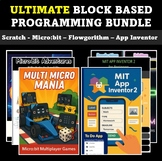
- "Micro:bit Multi Micro Mania": This material focuses on developing multiplayer games that require two or more Micro:bit devices to communicate via radio. Projects include "Hide and Seek" and "The Message Chain," and they teach students about collaborative problem-solving and wireless data transmission.
- "5 Micro:bit Adventures": This set introduces core programming concepts through five projects, including a quiz game, a reaction-time challenge, a classic Snake game, and a two-player "Secret Door" escape game. It emphasizes fundamental skills like using variables, conditionals, game blocks, and sprites.
The files collectively aim to develop critical skills in students, including:
- Computational Thinking: Students learn to design algorithms and break down complex problems into smaller, manageable steps.
- Logical Reasoning: The materials emphasize understanding the "why" behind the code, rather than just the "how."
- Collaboration: The multiplayer projects specifically require students to work together to design and debug code for multiple devices.
- Core Coding Concepts: Students gain practical experience with variables, conditional statements, loops, sprites, and radio communication.
- Problem-Solving: The documents encourage students to think critically and debug their own code to find solutions.

Highlights


Save even more with bundles

Description
The three documents provide a comprehensive set of project-based learning materials for the Micro:bit, designed for students and educators. The core content focuses on moving beyond simple, step-by-step tutorials to foster a deeper understanding of computational thinking and programming logic.
What's included?
- Approximately 20 detailed Micro:bit projects, from beginner to advanced levels
- Screenshots
- Solutions
- Animations
- Ideas
The projects are organized around distinct themes:
- "Let's go to Space!": Centered on a space exploration theme, these tasks guide students through creating animations and games like a "Meteor Shower" challenge. The content is designed to improve reading comprehension and problem-solving skills by presenting tasks with brief instructions, examples, and solutions.
- "Micro:bit Multi Micro Mania": This material focuses on developing multiplayer games that require two or more Micro:bit devices to communicate via radio. Projects include "Hide and Seek" and "The Message Chain," and they teach students about collaborative problem-solving and wireless data transmission.
- "5 Micro:bit Adventures": This set introduces core programming concepts through five projects, including a quiz game, a reaction-time challenge, a classic Snake game, and a two-player "Secret Door" escape game. It emphasizes fundamental skills like using variables, conditionals, game blocks, and sprites.
The files collectively aim to develop critical skills in students, including:
- Computational Thinking: Students learn to design algorithms and break down complex problems into smaller, manageable steps.
- Logical Reasoning: The materials emphasize understanding the "why" behind the code, rather than just the "how."
- Collaboration: The multiplayer projects specifically require students to work together to design and debug code for multiple devices.
- Core Coding Concepts: Students gain practical experience with variables, conditional statements, loops, sprites, and radio communication.
- Problem-Solving: The documents encourage students to think critically and debug their own code to find solutions.
