


Description
A program that runs once isn’t finished — it needs testing.
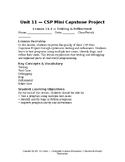
In Lesson 11.4, students improve the quality of their CSP Mini Capstone Project by learning how to systematically test, debug, and refine their Python programs. Students move beyond “it works” thinking and practice using multiple test cases, identifying edge cases, and fixing bugs based on results.
This lesson emphasizes real-world programming habits by having students document bugs, track fixes, and make intentional refinements. It serves as a critical quality-control step before final submission or presentation.
This lesson builds directly on Lesson 11.3 (Building the Program) and prepares students for final polish and reflection.
✅ What’s Included
✔ Student Worksheet
- Guided notes on testing, bugs, and refinement
- Vocabulary matching activity
- Concept check scenarios (unplugged)
- Code analysis focused on edge cases
- Test case table for systematic program testing
- Debug log for documenting bugs and fixes
- Optional challenge extension
- Reflection prompts (Answer ONE format)
✔ Teacher Guide
- Lesson overview and instructional goals
- Suggested pacing (50–75 minutes)
- Common misconceptions about testing and debugging
- Sample guidance for identifying edge cases
- Differentiation and extension ideas
🧠 Topics Covered
- Program testing
- Test cases and edge cases
- Debugging strategies
- Bug tracking and refinement
- Improving program clarity and reliability
- Real-world software quality practices
🧑🏫 Perfect For
- High school Computer Science Principles (Grades 9–12)
- Python-based CSP courses
- Capstone and project-based learning units
- Program workdays and refinement sessions
- Low-prep or sub-friendly lessons
- Preparing projects for final submission

Highlights


Save even more with bundles


Description
A program that runs once isn’t finished — it needs testing.
In Lesson 11.4, students improve the quality of their CSP Mini Capstone Project by learning how to systematically test, debug, and refine their Python programs. Students move beyond “it works” thinking and practice using multiple test cases, identifying edge cases, and fixing bugs based on results.
This lesson emphasizes real-world programming habits by having students document bugs, track fixes, and make intentional refinements. It serves as a critical quality-control step before final submission or presentation.
This lesson builds directly on Lesson 11.3 (Building the Program) and prepares students for final polish and reflection.
✅ What’s Included
✔ Student Worksheet
- Guided notes on testing, bugs, and refinement
- Vocabulary matching activity
- Concept check scenarios (unplugged)
- Code analysis focused on edge cases
- Test case table for systematic program testing
- Debug log for documenting bugs and fixes
- Optional challenge extension
- Reflection prompts (Answer ONE format)
✔ Teacher Guide
- Lesson overview and instructional goals
- Suggested pacing (50–75 minutes)
- Common misconceptions about testing and debugging
- Sample guidance for identifying edge cases
- Differentiation and extension ideas
🧠 Topics Covered
- Program testing
- Test cases and edge cases
- Debugging strategies
- Bug tracking and refinement
- Improving program clarity and reliability
- Real-world software quality practices
🧑🏫 Perfect For
- High school Computer Science Principles (Grades 9–12)
- Python-based CSP courses
- Capstone and project-based learning units
- Program workdays and refinement sessions
- Low-prep or sub-friendly lessons
- Preparing projects for final submission
