

Description
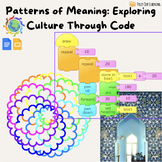
Introduce your students to the fascinating intersection of art, math, and technology with this dynamic project-based unit! Students explore the world of Islamic geometric patterns and use block-based coding platforms (like TurtleArt, Scratch, or Tinkercad Codeblocks) to design stunning, original tile compositions that blend symmetry, logic, and creative expression.
Watch this video to learn about the skills your students will learn!
This cross-curricular unit is perfect for teachers looking to weave geometry, cultural appreciation, and coding into one cohesive and inspiring project—no coding background required!
Students Will:
- Investigate mathematical patterns and symmetry in Islamic art
- Plan and sketch tile designs using geometric forms
- Learn how to use loops, rotations, and transformations through visual coding
- Build a digital tile that reflects both artistic vision and mathematical precision
- Reflect on how design choices affect both form and function
What’s Included:
- 7 lesson plans with step-by-step guidance
- Step-by-step Video tutorials to teach you and your students the basics of turtle art, and how to get started.
- Coding mini-lessons (loops, transformations, modularity)
- Student handouts: planning templates, research charts, pseudocode scaffolds, vocabulary supports
- Easy-to-use rubrics for evaluating both design and code
- No-prep worksheets and reflection activities
- Printable and digital versions for classroom or remote learning
Designed For:
- STEAM, Art, or Engineering teachers looking to integrate coding into creative projects
- Math teachers introducing geometry through visual, hands-on work
- Middle school teachers seeking engaging, standards-aligned PBL units
- Any educator who wants to bring cultural exploration and computational thinking into the classroom
Standards-Aligned Skills:
- Geometry: transformations, symmetry, and proportion
- Visual Arts: composition, balance, and pattern
- Computer Science: loops, sequences, and modular programming
- Engineering: design thinking and problem-solving
Make math meaningful, coding creative, and design deeply rooted in cultural context—this unit will inspire learners to think like artists, engineers, and systems thinkers!
Computer Science Coding Unit: Tile Patterns | Art, Math & Engineering

Highlights


Description
Introduce your students to the fascinating intersection of art, math, and technology with this dynamic project-based unit! Students explore the world of Islamic geometric patterns and use block-based coding platforms (like TurtleArt, Scratch, or Tinkercad Codeblocks) to design stunning, original tile compositions that blend symmetry, logic, and creative expression.
Watch this video to learn about the skills your students will learn!
This cross-curricular unit is perfect for teachers looking to weave geometry, cultural appreciation, and coding into one cohesive and inspiring project—no coding background required!
Students Will:
- Investigate mathematical patterns and symmetry in Islamic art
- Plan and sketch tile designs using geometric forms
- Learn how to use loops, rotations, and transformations through visual coding
- Build a digital tile that reflects both artistic vision and mathematical precision
- Reflect on how design choices affect both form and function
What’s Included:
- 7 lesson plans with step-by-step guidance
- Step-by-step Video tutorials to teach you and your students the basics of turtle art, and how to get started.
- Coding mini-lessons (loops, transformations, modularity)
- Student handouts: planning templates, research charts, pseudocode scaffolds, vocabulary supports
- Easy-to-use rubrics for evaluating both design and code
- No-prep worksheets and reflection activities
- Printable and digital versions for classroom or remote learning
Designed For:
- STEAM, Art, or Engineering teachers looking to integrate coding into creative projects
- Math teachers introducing geometry through visual, hands-on work
- Middle school teachers seeking engaging, standards-aligned PBL units
- Any educator who wants to bring cultural exploration and computational thinking into the classroom
Standards-Aligned Skills:
- Geometry: transformations, symmetry, and proportion
- Visual Arts: composition, balance, and pattern
- Computer Science: loops, sequences, and modular programming
- Engineering: design thinking and problem-solving
Make math meaningful, coding creative, and design deeply rooted in cultural context—this unit will inspire learners to think like artists, engineers, and systems thinkers!
