TPT
Total:
$0.00
Pattern & Fluency Multiplication Table Printable Interactive Journal/Notebook
Share

Description

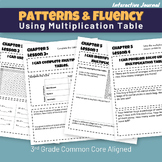
These interactive journal activities are aligned to Common Core and Texas standards. Each interactive notebook page is differentiated for independent work for students during centers. There are 2 versions for each lesson with the second prompt being slightly harder. Each page is designed to be cut out and glued into a journal. There are directions at the top of each page that explain what the students are to do.

Patterns and Fluency

  • Identify Patterns in the Multiplication Table
  • Use the Multiplication Table
  • Complete Multiplication Table
  • More Problem Solving

**This product is not created or endorsed by Big Ideas Learning, LLC or Big Ideas Math. It is merely a tool aligned to the pacing of the program, designed to extend topic thinking within the classroom

Report this resource to TPT
Reported resources will be reviewed by our team. Report this resource to let us know if this resource violates TPT's content guidelines.

Pattern & Fluency Multiplication Table Printable Interactive Journal/Notebook

Rated 5 out of 5, based on 1 reviews
5.0 (1 rating)
Mr Michelbook
966 Followers
$3.00

Highlights

Digital downloads
Grades icon
Grades
2nd - 4th
Standards icon
Standards
Pages
12

Save even more with bundles

These journal prompts are aligned to the pacing of the Big Ideas Math curriculum. There is a corresponding journal prompt for each lesson.Topics include:Understand Multiplication and DivisionMultiplication Facts and StrategiesMore Multiplication Facts and StrategiesDivision Facts and StrategiesPatte
Price $50.00Original Price $56.00Save $6.00
15
This bundle of interactive notebooks/journals contain 6 chapters for the 3rd grade Common Core standards for Operations and Algebraic Thinking. These interactive journal activities are aligned to Common Core and Texas standards. Each interactive notebook page is differentiated for independent work f
Price $15.00Original Price $17.00Save $2.00
6

Description

These interactive journal activities are aligned to Common Core and Texas standards. Each interactive notebook page is differentiated for independent work for students during centers. There are 2 versions for each lesson with the second prompt being slightly harder. Each page is designed to be cut out and glued into a journal. There are directions at the top of each page that explain what the students are to do.

Patterns and Fluency

  • Identify Patterns in the Multiplication Table
  • Use the Multiplication Table
  • Complete Multiplication Table
  • More Problem Solving

**This product is not created or endorsed by Big Ideas Learning, LLC or Big Ideas Math. It is merely a tool aligned to the pacing of the program, designed to extend topic thinking within the classroom

Report this resource to TPT
Reported resources will be reviewed by our team. Report this resource to let us know if this resource violates TPT's content guidelines.

Reviews

5.0
Rated 5 out of 5, based on 1 reviews
1
rating
All verified TPT purchases
Rated 5 out of 5
November 12, 2022
So helpful for my students! I truly saw growth using this resource!
Abby Chaplin
(TPT Seller)
119 reviews
Grades taught: 3rd
Student populations: Emerging bilinguals, Learning difficulties

Questions & Answers

Loading

Standards

to see state-specific standards (only available in the US).
Interpret products of whole numbers, e.g., interpret 5 × 7 as the total number of objects in 5 groups of 7 objects each. For example, describe a context in which a total number of objects can be expressed as 5 × 7.
Interpret whole-number quotients of whole numbers, e.g., interpret 56 ÷ 8 as the number of objects in each share when 56 objects are partitioned equally into 8 shares, or as a number of shares when 56 objects are partitioned into equal shares of 8 objects each. For example, describe a context in which a number of shares or a number of groups can be expressed as 56 ÷ 8.
Use multiplication and division within 100 to solve word problems in situations involving equal groups, arrays, and measurement quantities, e.g., by using drawings and equations with a symbol for the unknown number to represent the problem.
Loading