
Decoding Strategy Chart
46+ results
Filters
Grade
Subject
Resource type
Standard
Language
Supports

Factor Pairs / Factor Rainbow (Bilingual) English-Spanish

🌈 Factor Rainbow / Factor Arcoiris – Bilingual Math Anchor Chart Make math colorful and engaging with this English/Spanish bilingual anchor chart that helps students master the concept of factor pairs! Perfect for upper elementary classrooms, this visual tool introduces learners to the Factor Rainbow strategy—a fun, structured way to list factors of a number by pairing the lowest and highest, then working inward. 🟣 Features: Clear step-by-step instructions in both English and Spanish Eye-
4th - 6th
Arithmetic, Basic Operations, Numbers
CCSS
4.OA.B.4
, 6.NS.B.4

Order of Operations PEMDAS Lesson & Worksheets | 5th Grade Math | No Prep

Stop the confusion between "Multiplication first" and "Left-to-Right" rules! This complete, research-backed lesson plan goes beyond basic worksheets to help students truly master the Order of Operations. Designed specifically for 5th Grade Common Core standards, this packet uses scaffolded "faded practice" and visual aids to guide students from the "I Do" phase to independent mastery. 🚀 WHAT’S INSIDE THIS RESOURCE:Step-by-Step Lesson Plan: A 60-75 minute guide including a hook, explicit instr
4th - 8th
Algebra, Arithmetic, Order of Operations
CCSS
5.OA.A.1

Math Base-10 Blocks Place Value Chart Template

The first product from Standards-Aligned and Kind! A simple place value chart template that can be used to help students solve math problems and modified to change the number of columns to fit the magnitude of the numbers your students are using. Just type in a math problem next to each chart and have students show their work on the chart using base-10 block drawings. I used this mainly for subtraction problems. Once students could use concrete base-10 blocks to solve subtraction problems, they
1st - 4th
Arithmetic, Math, Place Value
CCSS
1.NBT.C.4
, 1.NBT.C.6
, 2.NBT.B.5
+3

Hundreds Chart Addition ( Adding Multiples of Ten)

This practice sheet can be used to help your students develop their addition skills and number sense. The problems included on this practice sheet are all two digit and multiples of ten. You could also use this as a math center by putting it into a clear-view for continuous practice. I hope you enjoy this resource. Remember to rate my products, and visit my store for more great resources!
2nd - 4th
Arithmetic, Math

Adding and Subtracting with Hundred Chart

10 worksheets of adding and subtracting with a hundred chart included.
1st - 2nd
Arithmetic, Basic Operations, Math

Addition and Subtraction Strategies Cheat Sheet

Use this addition and subtraction strategies cheat sheet to provide students with a variety of strategies for adding and subtracting. Print and laminate to keep posted in the room for students to use when needed. You can also print and provide copies to parents so that they are able to see the different strategies being taught in the classroom.
2nd - 5th
Arithmetic, Math, Math Test Prep
CCSS
2.NBT.B.5

Addition Strategies Poster or Reference in a Student Math Folder

This is an Addition Strategies page I gave my students at the beginning of the unit. It was a reference in their personal math folder. It was also displayed on the Math Wall in the classroom.
1st - 5th
Arithmetic, Math, Numbers

Math Strategies Study Guide

Omni bus of basic operations methods. Step by step visual guide for students and teachers.
Addition, multiplication, division, and subtraction.
Shows various methods to complete operations such as open number line, arrays, repeated addition/subtraction, missing factor model, and chucking the number.
Great for teachers as a quick reference or for students as a study guide.
1st - 8th, Adult Education
Arithmetic, Basic Operations, Math

100s Chart: Not Your Typical
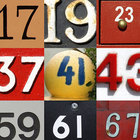
This 100s chart was developed from my personal experience working with young mathematicians. I found that a disconnect occurred with students when working with a typical 100s chart. The problem stemmed from the sequencing of the numbers. Most students associate adding with getting bigger and subtracting with getting smaller. However, a typical 100s chart spoke to my students by communicating that when counting up we moved down the chart and when counting back we moved up the chart. I decided to
K - 3rd
Arithmetic, Basic Operations, Numbers

Multiplication and Division Strategies- Quick Reference

Great tool to teach 2nd/3rd graders about division. This print out can easily be posted in a classroom, sent home with homework as a reference tool, or used to teach parents how to support their students.
2nd - 4th
Arithmetic, Basic Operations, Math

Division Strategy Practice

Skip counting to solve basic division facts
3rd - 6th
Arithmetic, Basic Operations, Math

Blank 1-100 chart first grade Spanish and English two charts per page

This is a blank 1-100 chart. The students can write them from 1-100, go down on the columns or start at 100 and count back. Enjoy!
K - 1st
Applied Math, Arithmetic, Mental Math

Hundred and Two Hundred Number Chart

Number chart for student reference. Good to use in class, small group, homework folders, and more!
PreK - 5th
Arithmetic, Basic Operations, Numbers

Place Value Charts

Editable Place Value Charts:
Ones, Tens, Hundreds
Ones, Tens, Hundreds, Thousands
Ones, Tens, Hundreds, Thousands, Ten Thousands
Ones, Tens, Hundreds, Thousands, Ten Thousands, Hundred Thousands
Extra Row included for totals/solutions
3rd - 5th
Arithmetic, Other (Math), Place Value
CCSS
4.NBT.A.1
, 4.NBT.A.3
, 4.NBT.B.4

KUKU Reward Chart TEMPLATE

Feel free to make edits to this KUKU Rewards Chart Word Doc TEMPLATE!
3rd - 5th
Arithmetic, Basic Operations

Multi-Purpose Hundreds Chart

This chart is used with a set of directions to reveal the prime numbers from 1-100. This chart can be used for various other activities as well.
5th - 9th
Arithmetic, Basic Operations, Numbers

Number Patterns Exit Ticket / Quiz
Chart - style number patterns exit ticket (3 question quiz)
2nd - 4th
Arithmetic, Basic Operations, Math

Median, Mode, and Range: How-to Model, Guided Examples, and Independent Practice

Median, Mode, and Range Process Chart including How-to Model, Guided Examples, and Independent Practice
4th - 10th
Arithmetic, Basic Operations, Other (Math)

Place Value- Writing numbers in standard, expanded and word form

This handout has a place value chart at the top of the page which goes up to millions. There are 30 problems. These problems consist of writing numbers in standard, expanded and word form. This was designed for 5th graders in mind.
5th - 6th
Arithmetic, Basic Operations

Adding Whole Numbers

Practicing adding whole numbers using a place value chart! I hope your students enjoy it!
3rd - 6th
Arithmetic, Basic Operations, Math

Adding Positive and Negative Integers

This page provides an overview for utilizing a visual strategy that helps students conceptualize zero pairs and solve for basic expressions. This approach works well with connecting the use of chips or other manipulatives and and also as a stand-alone strategy.
1st - 10th
Arithmetic, Basic Operations, Numbers

Math The Factor Game

a 2-player game that requires knowledge of factors as the strategy for winning.
5th - 7th
Arithmetic, Basic Operations, Math

Rectangle Sections "cheat sheet"

Students can use this as a guide to remember the "rectangle sections" strategy. First page has the example, second page has the steps written out.
4th - 6th
Arithmetic, Basic Operations, Math

Partial Quotient "cheat sheet"
This a tool for students to use to remember the steps of the partial quotient strategy for division.
4th - 6th
Arithmetic, Basic Operations, Math
CCSS
5.NBT.B.6
Showing 1-24 of 46+ results

TPT is the largest marketplace for PreK-12 resources, powered by a community of educators.
IXL family of brands