

DMC Creations
1 Follower
Shafer, Minnesota, United States
About the store
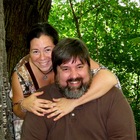
Collectively, Michelle and David have spent 14 years teaching in a variety of public and charter schools.
Read moreAll resources
Filters
Grade
Subject
Resource type
Standard
Audience
Programs & methods

Groundwater Porosity Lab
The Groundwater Porosity Investigation is a hands-on science lab in which students explore how different earth materials affect the movement of water underground. Working in small groups, students pour a measured amount of water through four materials — sand, gravel, and two mystery soil samples — and record how much drains through in exactly one minute. Before experimenting, students make and justify predictions based on particle size and pore space. After collecting data across two trials per
4th - 8th
Earth Sciences, Environment, General Science

Ocean Acidification Lab
Explore the ocean and its use as a carbon sink in this easy-to-set-up laboratory exercise. Students will be able to see how ocean acidification works when absorbing carbon and make comparisons to adding straight acid (vinegar) into the ocean itself. This lab opens up many questions for students about how plant and animal life survive in the ocean when this happens.
4th - 12th, Higher Education
Earth Sciences, Environment, Marine Science

Sound Pollution Assessment Lab
Sound pollution, or noise pollution, is unwanted or harmful sound that disrupts the environment. The decibel (dB) scale measures sound intensity logarithmically, meaning each 10 dB increase represents a tenfold increase in sound intensity. Prolonged exposure to sounds above 85 dB can cause hearing damage, while levels above 120 dB can cause immediate harm. Smartphone apps use the device's microphone to estimate sound levels, but their accuracy can vary based on microphone quality, calibration, a
9th - 12th, Adult Education, Higher Education
Earth Sciences, Environment, Instructional Technology

Environmental Consequences: Land Use Model Lab
In this interactive planning simulation, student groups take on distinct stakeholder roles (Developer, Environmental Advocate, and Farmer) to design a sustainable land-use plan for 400 acres of North Dakota prairie while balancing economic viability with environmental protection. Groups must allocate land for residential, commercial, agricultural, and conservation uses while adhering to realistic environmental laws and managing a detailed 20-year budget that tracks revenue, infrastructure costs,
6th - 12th, Adult Education, Higher Education
Earth Sciences, Environment, Geography

Products of Trees - Challenge
Have you ever really thought about how many different products from the around the world come from trees? Here's a challenge for any student - use hints or no hints - but how many products do come from trees? Here's a brief sampling... Use with conservation and science activities or your own Earth Day themed activities!
3rd - 12th
Environment, General Science, Writing

Seed Dispersal Experimentation Lab
This lab investigates how human footwear unintentionally transports seeds and soil, serving as a vector for invasive species dispersal. Students will conduct controlled walks in different environments while wearing various shoe types, then quantitatively analyze the mass of soil and number of seeds collected on each sole. By comparing results across footwear types and habitats, students generate real data to test hypotheses about which conditions facilitate the most dispersal. The lab bridges fi
8th - 12th, Adult Education, Higher Education
Earth Sciences, Environment, Other (Science)

"Green" Product Marketing and Analysis
This activity engages students in analyzing and comparing conventional versus environmentally friendly products through an economic lens. Students work to investigate product pairs, examining price premiums, production costs, marketing claims, and actual environmental impacts using a structured analysis worksheet. They evaluate whether companies' green claims constitute legitimate environmental improvements or potential greenwashing, connecting these observations to key environmental economics c
6th - 12th, Adult Education, Higher Education
Earth Sciences, Economics , Environment

Virtual Glacier Field Trip
Ever wish you could actually visit a glacier and explore it? This gives students a virtual opportunity to explore various glacier formations and geologic formations via virtual science. Students will visit a site through virtual reality and snap screenshots of identified geologic features. A great assessment for students to identify geologic features in a real-world setting.
8th - 12th, Adult Education, Higher Education
Earth Sciences, Environment

Starburst Rock Cycle Lab
We're making this lab a little more accessible and more opportunities for discussion and hands-on. Questions after every station with detail descriptions for what steps students should take. Could be used in a variety of settings with minimal set-up required.
4th - 12th, Adult Education, Higher Education
Earth Sciences, Environment, General Science
CCSS
RST.6-8.3

Natural Resources Field Experience
This three-part field experience assignment engages students in hands-on learning about natural resources through progressively complex activities. Students begin by conducting detailed ecosystem observations and analysis at a local natural area, documenting species interactions and environmental conditions. Next, they interview natural resources professionals to gain insight into real-world challenges and career opportunities in the field. Students are to pick one of each task or three of the s
10th - 12th, Adult Education, Higher Education
Earth Sciences, Geography, Other (Science)

Ice Core Glacial Studies Lab
Ever wondered what it would be like to explore climate science by studying the stories hidden in an ice core? Here's your (and your student's) chance! Here is the printable, lab ready worksheet for your students to analyze an ice core - made by you! Comes complete with: 1. Lab worksheet for students 2. Ice Core Analysis page - to match colors / pH levels to what those readings connect to in earth's early history.
6th - 12th, Adult Education, Higher Education
Earth Sciences, Environment, Marine Science
NGSS
HS-ESS2-5
, HS-ESS2-6
, HS-ESS2-7

Thermocline Oceans Lab
Looking for a ready to go thermocline lab write-up for you to give to your students? Comes with overall objectives, easy to follow instructions, and lab assessment questions at the end. Learn about and explore the ocean's thermocline through this hands-on and interactive lab for many age levels.
4th - 12th, Adult Education, Higher Education
Basic Principles, Earth Sciences, Environment
NGSS
HS-ESS3-1
, HS-ESS3-5

Parts of a River Powerpoint
This PowerPoint presentation covers the basics of parts of a river. It includes a spreadsheet for the students to fill out about the definitions of the different parts.
2nd - 4th
Environment, Geography

State and Province Research Project
A research project for students to explore the United States and the Canadian provinces. Allows for differentiated assessment of students and gives them options to what projects they wish to complete. Includes a rubric based on standardized grading (N,P,M,E) and a blank rubric for choice grading (by points or by A,B,C,D).
Classrooms can use the State and Province Fact Sheets to create a classroom State and Province Textbook.
3rd - 5th
Canadian History, Geography, Social Studies
Showing 1-14 of 14 results
About the store
Experience
Collectively, Michelle and David have spent 14 years teaching in a variety of public and charter schools.
Teaching style
We are OUT of the BOX teachers. We strive for the creative, innovative and unique.
Awards & shining teacher moments
Michelle was nominated as "Minnesota Teacher of the Year" in 2013.
My own education history
Michelle and David both have Bachelors of Science degrees in Teaching: Elementary Education with Middle School Communication Arts and Literature. David also has a Middle School Science license.
Additional biographical information
David and Michelle spend their summers fossil hunting and adventuring in the world of the SCA (a Medieval re-enactment group).
David runs a "Bug Club" at his school and Michelle also directs the largest junior geology club in the Midwest.

TPT is the largest marketplace for PreK-12 resources, powered by a community of educators.
IXL family of brands