


Description
SAVE 30% by purchasing ALL my Life Science Interactive Notebook Units! EDITABLE Input Notes Included!
About this Product
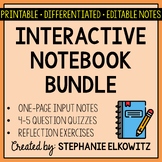
This differentiated unit bundle includes 16 INB units. Each unit is composed of INB lessons organized into chapters. Each chapter includes:
• An overview with photos of the completed INB activity
• One page of input notes (differentiated when necessary)
• At least one INB activity (key included)
• A 4-5 question mini assessment (key included)
• A 2-part reflection exercise
Important Notes:
• Download a FREE Interactive Notebook Unit to learn more about my INB units
• Save $$$ with the Life Science Complete Curriculum
• Save $$$$ with the Integrated Science Complete Curriculum
*********************************************************************************************************
EDITABLE INPUT NOTES
• 100% one-page EDITABLE copies of input notes are included
• Notes are saved as a single .docx file that opens with Microsoft Word & Google Docs
• Editable notes are written in font compatible with Microsoft Word & Google Docs
*********************************************************************************************************
This bundle includes:
Chapter 1: Types of Animals
Chapter 2: Animal Needs
Chapter 3: External Animal Parts
Chapter 4: Types of Adaptations (Physical vs. Behavioral)
Chapter 5: Aquatic Animal Adaptations
Chapter 6: Feeding Adaptations
Chapter 7: Locomotion Adaptations
Chapter 8: Body Covering Adaptations
Chapter 9: Defense Adaptations
Chapter 10: Winter Adaptations
Chapter 11: Extreme Environment Adaptations
Chapter 12: Instincts vs. Learned Behavior
Chapter 13: Behavioral Adaptations Pt 1
Chapter 14: Behavioral Adaptations Pt 2
Chapter 15: Seasonal Behavior
Chapter 16: Life Cycle Adaptations
Chapter 17: Animal Intelligence
Chapter 18: Animal Communication
Chapter 19: Thermoregulation
Chapter 20: Endotherms vs. Ectotherms
• Cells and Cell Membrane INB Unit
Chapter 1: Cell Theory
Chapter 2: Unicellular vs. Multicellular
Chapter 3: Prokaryotes vs. Eukaryotes
Chapter 4: 4 Major Types of Cells (Bacteria, Protists, Animal Cells, Plant Cells)
Chapter 5: Animal Cell
Chapter 6: Plant Cell
Chapter 7: Comparing Plant & Animal Cells
Chapter 8: Bacterium
Chapter 9: Protists
Chapter 10: The Cell Membrane
Chapter 11: Cell Receptors & Communication
Chapter 12: Cell Transport (Passive and Active Transport)
Chapter 13: Osmosis
Chapter 14: Endocytosis vs. Exocytosis
Chapter 1: Why do cells divide?
Chapter 2: Cell Growth & Cycle
Chapter 3: Mitosis
Chapter 4: Animal vs. Plant Mitosis
Chapter 5: Meiosis
Chapter 6: Mitosis vs. Meiosis
Chapter 7: Recombination (Independent Assortment, Crossing Over)
Chapter 8: Nondisjunction
Chapter 9: Abnormal Cell Growth
• Classification of Living Things INB Unit
Chapter 1: What is a living thing?
Chapter 2: Important Life Functions
Chapter 3: Classifying Organisms
Chapter 4: Taxonomy
Chapter 5: Three Domains
Chapter 6: Bacteria vs. Archaea
Chapter 7: Eukaryota Kingdoms
Chapter 8: Major Animal Phyla
Chapter 9: Vertebrates
Chapter 10: Invertebrates
Chapter 11: Binomial Nomenclature
Chapter 1: What is ecology?
Chapter 2: Living vs. Nonliving Things
Chapter 3: Types of Organisms (Producer, Consumer, Decomposer)
Chapter 4: Types of Consumers
Chapter 5: The Role of the Sun
Chapter 6: Food Chains
Chapter 7: Energy Flow Through a Food Chain
Chapter 8: Energy Pyramid
Chapter 9: Ecological Relationships (Competition, Predation & Types of Symbiosis)
Chapter 10: Important Ecological Roles
Chapter 11: Nutrient Cycling (Oxygen, Carbon Dioxide & Water)
Chapter 12: Oxygen & Carbon Dioxide Cycling
Chapter 13: Water Cycle
Chapter 14: Carbon Cycle
Chapter 15: Ecological Organization
Chapter 16: Impact of Environmental Change
Chapter 17: Carrying Capacity
Chapter 18: Biomes
Chapter 19: Freshwater Ecosystems
Chapter 20: Marine Ecosystems
Chapter 21: Ecological Succession
Chapter 22: Biodiversity
Chapter 23: Why is biodiversity important?
• Evolution and Natural Selection INB Unit
Chapter 1: What is evolution?
Chapter 2: Theory of Natural Selection
Chapter 3: Variation & Species Diversity
Chapter 4: Frequency of Traits
Chapter 5: Competition for Resources
Chapter 6: Evidence for Evolution
Chapter 7: Comparative Embryology
Chapter 8: Comparative Anatomy
Chapter 9: Fossils
Chapter 10: Using Fossils to Study Climate
Chapter 11: Fossil Record
Chapter 12: DNA as a Molecular Clock
Chapter 13: Phylogenetic Trees
Chapter 14: Changes in the Environment
Chapter 15: Endangerment & Extinction
Chapter 16: Artificial Selection
• The Five Senses and Sensory Processing INB Unit
Chapter 1: The Five Senses
Chapter 2: Vision
Chapter 3: Hearing
Chapter 4: Taste (Gustation)
Chapter 5: Smell (Olfaction)
Chapter 6: Touch (Somatosensory)
Chapter 7: Processing Sensory Information
Chapter 8: Responding to Sensory Information
Chapter 9: Reflexes
• Heredity and Genetics INB Unit
Chapter 1: What is heredity?
Chapter 2: Inherited vs. Learned Traits
Chapter 3: Nature vs. Nurture
Chapter 4: The Environment and Gene Expression
Chapter 5: Introduction to Genetics
Chapter 6: Human Heredity
Chapter 7: Chromosomes & Karyotyping
Chapter 8: Mendel’s Experiment & Laws
Chapter 9: Dominant & Recessive Alleles
Chapter 10: Punnett Squares
Chapter 11: Non-Mendelian Genetics
Chapter 12: DNA
Chapter 13: RNA
Chapter 14: Transcription & Translation
Chapter 15: DNA Replication
Chapter 16: Mutations
Chapter 17: Genetic Diseases
Chapter 18: Pedigrees
Chapter 19: Genetic Technologies (Genetic Engineering, Gene Therapy, Cloning, Stem Cells)
Chapter 20: Gel Electrophoresis
• Homeostasis and Disease INB Unit
Chapter 1: Homeostasis
Chapter 2: Maintaining Homeostasis
Chapter 3: Feedback Mechanism
Chapter 4: Regulating Body Temperature
Chapter 5: Regulating Blood Sugar
Chapter 6: Responding to Internal Stimuli
Chapter 7: Disrupting Homeostasis
Chapter 8: Disease
Chapter 9: Causes of Disease
Chapter 10: Germ Theory
Chapter 11: Infectious Disease (Types of Pathogens)
Chapter 12: Viral Disease
Chapter 13: Bacterial Disease
Chapter 14: Antibiotics & Resistance
Chapter 15: Leading Diseases in the US
Chapter 1: Immune System
Chapter 2: Lymphatic System
Chapter 3: Types of White Blood Cells
Chapter 4: Types of Immunity
Chapter 5: Immune System Responses (3 Lines of Defense)
Chapter 6: Allergic Diseases
Chapter 7: HIV
Chapter 8: Vaccination
• Human Body Overview INB Unit
Chapter 1: The Human Body (External Parts)
Chapter 2: Levels of Organization
Chapter 3: Types of Tissue
Chapter 4: Human Body Systems
Chapter 5: Major Organs
• Human Anatomy and Physiology INB Unit
Chapter 1: Skin (Integumentary System)
Chapter 2: Skeletal System
Chapter 3: Muscular System
Chapter 4: Neurons
Chapter 5: Divisions of the Nervous System
Chapter 6: The Brain
Chapter 7: Circulation
Chapter 8: Blood Vessels
Chapter 9: Blood
Chapter 10: The Heart
Chapter 11: Respiratory System
Chapter 12: Gas Exchange
Chapter 13: Digestive System
Chapter 14: Digestion
Chapter 15: Endocrine System
Chapter 16: Hormones
Chapter 17: Excretion
Chapter 18: Organ Systems Work Together
Chapter 19: Locomotion
Chapter 20: Communication in the Body (Hormones vs. Nerve Impulses)
Chapter 21: Fueling the Body (Cellular Respiration)
Chapter 22: Five Senses
Chapter 1: Growth and Development
Chapter 2: Patterns of Development
Chapter 3: Animal Life Cycle
Chapter 4: Plant Life Cycle
Chapter 5: Metamorphosis (Complete vs. Incomplete Metamorphosis)
Chapter 6: Frog Life Cycle
Chapter 7: Butterfly Life Cycle
Chapter 8: Chicken Life Cycle
Chapter 9: Flowering Plant Life Cycle
Chapter 10: Parent vs. Offspring
• Metabolism and Nutrition INB Unit
Chapter 1: Important Nutrients
Chapter 2: What is food used for?
Chapter 3: What affects calorie need?
Chapter 4: Metabolism
Chapter 5: What affects metabolism?
Chapter 6: Nutrition Imbalance
Chapter 1: Types of Microscopes
Chapter 2: Light Microscope
Chapter 3: Microscope Care & Safety
Chapter 4: Preparing and Viewing a Specimen
Chapter 5: Magnifying and Focusing a Specimen
Chapter 6: Microscopic Measurement
Chapter 1: Types of Plants
Chapter 2: Plant Needs
Chapter 3: Plant Structure
Chapter 4: Flower Anatomy
Chapter 5: Leaf Structure
Chapter 6: Deciduous vs. Coniferous
Chapter 7: Types of Angiosperms (Monocots & Dicots)
Chapter 8: Plant Reproduction
Chapter 9: Seed Dispersal
Chapter 10: Seed vs. Spore
Chapter 11: Angiosperm Reproduction
Chapter 12: Gymnosperm Reproduction
Chapter 13: Vegetative Propagation
Chapter 14: Growth Patterns in Angiosperms
Chapter 15: Plant Environmental Adaptations
Chapter 16: Plant Defense Adaptation
Chapter 17: Leaf Adaptations
Chapter 18: Stem Adaptations
Chapter 19: Extreme Environment Adaptations
Chapter 20: Responding to the Environment
Chapter 21: Water Regulation (Stomata)
Chapter 22: Oxygen & Carbon Dioxide Cycling
Chapter 23: Photosynthesis
Chapter 24: Plant vs. Algae
Chapter 25: Symbiotic Relationships
Chapter 26: Plant Uses
• Reproduction and Development INB Unit
Chapter 1: Forms of Reproduction
Chapter 2: Asexual Reproduction
Chapter 3: Sexual Reproduction
Chapter 4: Growth and Development
Chapter 5: Patterns of Development (Direct Development, Metamorphosis)
Chapter 6: Fertilization & Development (Internal vs. External)
Chapter 7: Embryonic Development
Chapter 8: Female Reproductive System
Chapter 9: Male Reproductive System
Chapter 10: Gametes
Chapter 11: Menstrual Cycle
Chapter 12: Human Development
Chapter 13: Fetal Development Hazards
Chapter 14: Reproductive Technologies (Artificial Insemination, In Vitro Fertilization, Cloning)
Additional Information
- Topics are differentiated for upper elementary and intermediate grades.
- Topics are differentiated with a color and shape code.
- Two pages of generic and self-assessment reflection prompts are included.
NGSS Alignment
Download the preview for a reference file to help you align your INB lessons to the Next Generation Science Standards and Disciplinary Core Ideas. The content in these products exceeds NGSS in order to satisfy state standards, to provide background information to NGSS and to enrich or enhance NGSS.
TERMS OF USE
• All rights reserved by Stephanie Elkowitz.
• This product is to be used by the original purchaser only.
• Intended for classroom and personal use only.
• Copying for more than one teacher, classroom, department, school, or school system is prohibited.
• This product may not be distributed or displayed digitally for public view.
• Failure to comply is a copyright infringement and a violation of the Digital Millennium Copyright Act (DMCA).

Highlights


Bonus
Save even more with bundles
Description
SAVE 30% by purchasing ALL my Life Science Interactive Notebook Units! EDITABLE Input Notes Included!
About this Product
This differentiated unit bundle includes 16 INB units. Each unit is composed of INB lessons organized into chapters. Each chapter includes:
• An overview with photos of the completed INB activity
• One page of input notes (differentiated when necessary)
• At least one INB activity (key included)
• A 4-5 question mini assessment (key included)
• A 2-part reflection exercise
Important Notes:
• Download a FREE Interactive Notebook Unit to learn more about my INB units
• Save $$$ with the Life Science Complete Curriculum
• Save $$$$ with the Integrated Science Complete Curriculum
*********************************************************************************************************
EDITABLE INPUT NOTES
• 100% one-page EDITABLE copies of input notes are included
• Notes are saved as a single .docx file that opens with Microsoft Word & Google Docs
• Editable notes are written in font compatible with Microsoft Word & Google Docs
*********************************************************************************************************
This bundle includes:
Chapter 1: Types of Animals
Chapter 2: Animal Needs
Chapter 3: External Animal Parts
Chapter 4: Types of Adaptations (Physical vs. Behavioral)
Chapter 5: Aquatic Animal Adaptations
Chapter 6: Feeding Adaptations
Chapter 7: Locomotion Adaptations
Chapter 8: Body Covering Adaptations
Chapter 9: Defense Adaptations
Chapter 10: Winter Adaptations
Chapter 11: Extreme Environment Adaptations
Chapter 12: Instincts vs. Learned Behavior
Chapter 13: Behavioral Adaptations Pt 1
Chapter 14: Behavioral Adaptations Pt 2
Chapter 15: Seasonal Behavior
Chapter 16: Life Cycle Adaptations
Chapter 17: Animal Intelligence
Chapter 18: Animal Communication
Chapter 19: Thermoregulation
Chapter 20: Endotherms vs. Ectotherms
• Cells and Cell Membrane INB Unit
Chapter 1: Cell Theory
Chapter 2: Unicellular vs. Multicellular
Chapter 3: Prokaryotes vs. Eukaryotes
Chapter 4: 4 Major Types of Cells (Bacteria, Protists, Animal Cells, Plant Cells)
Chapter 5: Animal Cell
Chapter 6: Plant Cell
Chapter 7: Comparing Plant & Animal Cells
Chapter 8: Bacterium
Chapter 9: Protists
Chapter 10: The Cell Membrane
Chapter 11: Cell Receptors & Communication
Chapter 12: Cell Transport (Passive and Active Transport)
Chapter 13: Osmosis
Chapter 14: Endocytosis vs. Exocytosis
Chapter 1: Why do cells divide?
Chapter 2: Cell Growth & Cycle
Chapter 3: Mitosis
Chapter 4: Animal vs. Plant Mitosis
Chapter 5: Meiosis
Chapter 6: Mitosis vs. Meiosis
Chapter 7: Recombination (Independent Assortment, Crossing Over)
Chapter 8: Nondisjunction
Chapter 9: Abnormal Cell Growth
• Classification of Living Things INB Unit
Chapter 1: What is a living thing?
Chapter 2: Important Life Functions
Chapter 3: Classifying Organisms
Chapter 4: Taxonomy
Chapter 5: Three Domains
Chapter 6: Bacteria vs. Archaea
Chapter 7: Eukaryota Kingdoms
Chapter 8: Major Animal Phyla
Chapter 9: Vertebrates
Chapter 10: Invertebrates
Chapter 11: Binomial Nomenclature
Chapter 1: What is ecology?
Chapter 2: Living vs. Nonliving Things
Chapter 3: Types of Organisms (Producer, Consumer, Decomposer)
Chapter 4: Types of Consumers
Chapter 5: The Role of the Sun
Chapter 6: Food Chains
Chapter 7: Energy Flow Through a Food Chain
Chapter 8: Energy Pyramid
Chapter 9: Ecological Relationships (Competition, Predation & Types of Symbiosis)
Chapter 10: Important Ecological Roles
Chapter 11: Nutrient Cycling (Oxygen, Carbon Dioxide & Water)
Chapter 12: Oxygen & Carbon Dioxide Cycling
Chapter 13: Water Cycle
Chapter 14: Carbon Cycle
Chapter 15: Ecological Organization
Chapter 16: Impact of Environmental Change
Chapter 17: Carrying Capacity
Chapter 18: Biomes
Chapter 19: Freshwater Ecosystems
Chapter 20: Marine Ecosystems
Chapter 21: Ecological Succession
Chapter 22: Biodiversity
Chapter 23: Why is biodiversity important?
• Evolution and Natural Selection INB Unit
Chapter 1: What is evolution?
Chapter 2: Theory of Natural Selection
Chapter 3: Variation & Species Diversity
Chapter 4: Frequency of Traits
Chapter 5: Competition for Resources
Chapter 6: Evidence for Evolution
Chapter 7: Comparative Embryology
Chapter 8: Comparative Anatomy
Chapter 9: Fossils
Chapter 10: Using Fossils to Study Climate
Chapter 11: Fossil Record
Chapter 12: DNA as a Molecular Clock
Chapter 13: Phylogenetic Trees
Chapter 14: Changes in the Environment
Chapter 15: Endangerment & Extinction
Chapter 16: Artificial Selection
• The Five Senses and Sensory Processing INB Unit
Chapter 1: The Five Senses
Chapter 2: Vision
Chapter 3: Hearing
Chapter 4: Taste (Gustation)
Chapter 5: Smell (Olfaction)
Chapter 6: Touch (Somatosensory)
Chapter 7: Processing Sensory Information
Chapter 8: Responding to Sensory Information
Chapter 9: Reflexes
• Heredity and Genetics INB Unit
Chapter 1: What is heredity?
Chapter 2: Inherited vs. Learned Traits
Chapter 3: Nature vs. Nurture
Chapter 4: The Environment and Gene Expression
Chapter 5: Introduction to Genetics
Chapter 6: Human Heredity
Chapter 7: Chromosomes & Karyotyping
Chapter 8: Mendel’s Experiment & Laws
Chapter 9: Dominant & Recessive Alleles
Chapter 10: Punnett Squares
Chapter 11: Non-Mendelian Genetics
Chapter 12: DNA
Chapter 13: RNA
Chapter 14: Transcription & Translation
Chapter 15: DNA Replication
Chapter 16: Mutations
Chapter 17: Genetic Diseases
Chapter 18: Pedigrees
Chapter 19: Genetic Technologies (Genetic Engineering, Gene Therapy, Cloning, Stem Cells)
Chapter 20: Gel Electrophoresis
• Homeostasis and Disease INB Unit
Chapter 1: Homeostasis
Chapter 2: Maintaining Homeostasis
Chapter 3: Feedback Mechanism
Chapter 4: Regulating Body Temperature
Chapter 5: Regulating Blood Sugar
Chapter 6: Responding to Internal Stimuli
Chapter 7: Disrupting Homeostasis
Chapter 8: Disease
Chapter 9: Causes of Disease
Chapter 10: Germ Theory
Chapter 11: Infectious Disease (Types of Pathogens)
Chapter 12: Viral Disease
Chapter 13: Bacterial Disease
Chapter 14: Antibiotics & Resistance
Chapter 15: Leading Diseases in the US
Chapter 1: Immune System
Chapter 2: Lymphatic System
Chapter 3: Types of White Blood Cells
Chapter 4: Types of Immunity
Chapter 5: Immune System Responses (3 Lines of Defense)
Chapter 6: Allergic Diseases
Chapter 7: HIV
Chapter 8: Vaccination
• Human Body Overview INB Unit
Chapter 1: The Human Body (External Parts)
Chapter 2: Levels of Organization
Chapter 3: Types of Tissue
Chapter 4: Human Body Systems
Chapter 5: Major Organs
• Human Anatomy and Physiology INB Unit
Chapter 1: Skin (Integumentary System)
Chapter 2: Skeletal System
Chapter 3: Muscular System
Chapter 4: Neurons
Chapter 5: Divisions of the Nervous System
Chapter 6: The Brain
Chapter 7: Circulation
Chapter 8: Blood Vessels
Chapter 9: Blood
Chapter 10: The Heart
Chapter 11: Respiratory System
Chapter 12: Gas Exchange
Chapter 13: Digestive System
Chapter 14: Digestion
Chapter 15: Endocrine System
Chapter 16: Hormones
Chapter 17: Excretion
Chapter 18: Organ Systems Work Together
Chapter 19: Locomotion
Chapter 20: Communication in the Body (Hormones vs. Nerve Impulses)
Chapter 21: Fueling the Body (Cellular Respiration)
Chapter 22: Five Senses
Chapter 1: Growth and Development
Chapter 2: Patterns of Development
Chapter 3: Animal Life Cycle
Chapter 4: Plant Life Cycle
Chapter 5: Metamorphosis (Complete vs. Incomplete Metamorphosis)
Chapter 6: Frog Life Cycle
Chapter 7: Butterfly Life Cycle
Chapter 8: Chicken Life Cycle
Chapter 9: Flowering Plant Life Cycle
Chapter 10: Parent vs. Offspring
• Metabolism and Nutrition INB Unit
Chapter 1: Important Nutrients
Chapter 2: What is food used for?
Chapter 3: What affects calorie need?
Chapter 4: Metabolism
Chapter 5: What affects metabolism?
Chapter 6: Nutrition Imbalance
Chapter 1: Types of Microscopes
Chapter 2: Light Microscope
Chapter 3: Microscope Care & Safety
Chapter 4: Preparing and Viewing a Specimen
Chapter 5: Magnifying and Focusing a Specimen
Chapter 6: Microscopic Measurement
Chapter 1: Types of Plants
Chapter 2: Plant Needs
Chapter 3: Plant Structure
Chapter 4: Flower Anatomy
Chapter 5: Leaf Structure
Chapter 6: Deciduous vs. Coniferous
Chapter 7: Types of Angiosperms (Monocots & Dicots)
Chapter 8: Plant Reproduction
Chapter 9: Seed Dispersal
Chapter 10: Seed vs. Spore
Chapter 11: Angiosperm Reproduction
Chapter 12: Gymnosperm Reproduction
Chapter 13: Vegetative Propagation
Chapter 14: Growth Patterns in Angiosperms
Chapter 15: Plant Environmental Adaptations
Chapter 16: Plant Defense Adaptation
Chapter 17: Leaf Adaptations
Chapter 18: Stem Adaptations
Chapter 19: Extreme Environment Adaptations
Chapter 20: Responding to the Environment
Chapter 21: Water Regulation (Stomata)
Chapter 22: Oxygen & Carbon Dioxide Cycling
Chapter 23: Photosynthesis
Chapter 24: Plant vs. Algae
Chapter 25: Symbiotic Relationships
Chapter 26: Plant Uses
• Reproduction and Development INB Unit
Chapter 1: Forms of Reproduction
Chapter 2: Asexual Reproduction
Chapter 3: Sexual Reproduction
Chapter 4: Growth and Development
Chapter 5: Patterns of Development (Direct Development, Metamorphosis)
Chapter 6: Fertilization & Development (Internal vs. External)
Chapter 7: Embryonic Development
Chapter 8: Female Reproductive System
Chapter 9: Male Reproductive System
Chapter 10: Gametes
Chapter 11: Menstrual Cycle
Chapter 12: Human Development
Chapter 13: Fetal Development Hazards
Chapter 14: Reproductive Technologies (Artificial Insemination, In Vitro Fertilization, Cloning)
Additional Information
- Topics are differentiated for upper elementary and intermediate grades.
- Topics are differentiated with a color and shape code.
- Two pages of generic and self-assessment reflection prompts are included.
NGSS Alignment
Download the preview for a reference file to help you align your INB lessons to the Next Generation Science Standards and Disciplinary Core Ideas. The content in these products exceeds NGSS in order to satisfy state standards, to provide background information to NGSS and to enrich or enhance NGSS.
TERMS OF USE
• All rights reserved by Stephanie Elkowitz.
• This product is to be used by the original purchaser only.
• Intended for classroom and personal use only.
• Copying for more than one teacher, classroom, department, school, or school system is prohibited.
• This product may not be distributed or displayed digitally for public view.
• Failure to comply is a copyright infringement and a violation of the Digital Millennium Copyright Act (DMCA).
