

Robotics
13 Followers
Nashville, Tennessee, United States
About the store
Dr. Juan Rojas received his B.S., M.S., and Ph.D. from Vanderbilt University (ranked 15th in the USA). He began studying robotics in the last year of his bachelor degree in 2001.
Dr. Rojas has been studying robotics for 16 years. In his Master’s program, he had his first experience with a middleware system: the Intelligent Robotics Architecture (IMA). IMA was a similar program to ROS and was built by students in the Center for Intelligent Systems at Vanderbilt University. In 2011, Dr. Rojas performed a post-doctoral fellowship at the National Institute of Advanced Science and Technology in Tsukuba, Japan. During his time in Japan, Dr. Rojas was exposed to Japan’s main middleware project: OpenRTM. Later in 2012, Dr. Rojas began as an Assistant Professor at the School of Software in Sun-Yat Sen University and began teaching a full ROS course in the Fall of 2012.
He started what may be the first academic course on ROS in China. Since then Dr. Rojas has continued to teach a ROS course to undergraduate and graduate student every year. Along the way, Dr. Rojas has lead two translation projects for two ROS texts from English to Chinese. Namely: ROS By Example Volume 1 and 2 from Patrick Goble and are now available online in China under the names of ROS入门实例 and ROS进阶实例.
Dr. Rojas has also organized training workshops including the 2017 ROS Summer School in East China Normal University in Shanghai (http://www.robotics.sei.ecnu.edu.cn/ros2017), along with the 2016 GDUT-Gaitech ROS Training Workshop, and the 2015 ROS Summer School hosted by Gaitech.
Furthermore, Dr. Rojas actively uses ROS in his research, actively participating in the development of the code. All research code is made available as open source in Github and easily accessible through his research web page at: www.JuanRojas.net/research. Dr. Rojas has published more than 40 publications at international journals, conferences, and workshops.
Read moreAll resources
Filters
Grade
Subject
Resource type
Audience

Bundle: Slides4 "A Systematic Approach to Learning Robot Programming with ROS"
In this bundle, you will have the complete set of 16 lectures used in my ROS lectures based on the text: A Systematic Approach to Learning Robot Programming with ROS.
Detailed listing below:
01. Introduction to A Systematic Approach to Learning Robot Programming with ROS
02. ROS: Nodes, Topics, and Tools
03. ROS: Messages, Services, and Actions
04. Simulation in ROS
05. Coordinate Transforms in ROS
06. Sensing and Visualization in ROS
07a Using Cameras in ROS
07b. OpenCV with ROS
08. Depth Imag
9th - 12th, Adult Education, Higher Education
Robotics

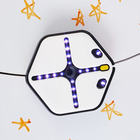
Introduction to the ROOT robot and it's Educational System
ROOT is a new and exciting robot that children and teenagers alike can use to learn programming. The robot has more than 50 sensors and actuators and comes with a complete educational system built on iOS to teach coding concepts in a systematic and fun way. ROOTs framework is extremely powerful and intuitive. It contains three different levels of coding: simple block programming for children, parameterized programming for older kids, and swift programming for a close experience to what python m
PreK - 12th
Computer Science - Technology, Performing Arts, Robotics

03. ROS: Messages, Services, and Actions (Videos and Slides)
4 Videos + Slides:
In this class, you will learn to create customized messages, you will learn to program ROS services, and ROS Actions. These are key communication protocols in ROS 1.0.
Messages (Video 1)
- Custom ROS Messages
- Learn to understand building and generation
- Test with publishers and subscribers
- Variable Length Messages (C++/Python representations)
ROS Services (Video 2)
- Service Messages
- Service Nodes (c++ code)
- Manual interaction with a ROS Service (Command Line Tools
9th - 12th, Adult Education, Higher Education
Robotics

13. Arm Control with the Baxter Simulator
Learning the Baxter Simulation
- Installation
- Running
Simulator Modules
- Enable Robot & Tuck
Baxter SDK
- Joints and Topics
- Grippers (absolute and relative controller, interface)
- Head Control (Panning and Nodding)
- Commanding Baxter Joints (simple discontinuous motion)
ROS Joint Trajectory Controller
Joint Space Recording and Playback Nodes
- Teaching by Demonstration
- Recording joint value configuration
- Using pre-recorded files (action C++)
Baxter Kinematics
- Baxter_fwd_solver(
9th - 12th, Adult Education, Higher Education
Robotics

14. Object Grasping
Achieving generic grasping
- Code Organization
- Object Manipulation Query Service
- Computing: Approach | Grasp | Depart
- Poses for specific object/gripper
- Action Server Code (C++)
Generic Gripper Service
- Different types of grippers
Example Object-Grabber Action Client
- Client logic to execute desired behavior
- Code (C++, action client/server)
9th - 12th, Adult Education, Higher Education
Robotics

06. Sensing and Visualization in ROS
RVIZ
- Overview
- Robot Model & Parameter Server
- Frames in RVIZ
Markers
- Overview and motivation
- Visualization Messages
- Example 1: Spherical Markers Node (C++)
- Modifying marker visualization properties
- Example 2: Triad (Frame) Display Example (C++)
- Example 3: Interactive Markers (C++)
- Marker creation
- Controls
- Interactive Marker Server
- Externally interact by embedding a service server/client
Displaying Sensor Values (Generated in Gazebo & Displayed in RVIZ)
- LIDAR
9th - 12th, Adult Education, Higher Education
Robotics

15. Perception-based Manipulation
Integrates Visual System with Manipulation and Object Grasping Via Action-Servers
- Modelling-Perception-Manipulation (Planning/Execution) Integration
Extrinsic Camera Calibration
- Launching extrinsic calibration
Perception-Manipulation System
- Understanding Architecture
- Integrating Visual Targets (C++ code)
- Running Examples
- Looking at server-side code
- Looking at client-side code
9th - 12th, Adult Education, Higher Education
School Counseling

03. ROS: Messages, Services, and Actions
In this class, you will learn to create customized messages, you will learn to program ROS services, and ROS Actions. These are key communication protocols in ROS 1.0.
Messages
- Custom ROS Messages
- Learn to understand building and generation
- Test with publishers and subscribers
- Variable Length Messages (C++/Python representations)
ROS Services
- Service Messages
- Service Nodes (c++ code)
- Manual interaction with a ROS Service (Command Line Tools)
- Service Clients and Service Serv
9th - 12th, Adult Education, Higher Education
Robotics

12. Arm Motion Planning
Overview
- Motion Planning
- Collision Avoidance
- Optimization
Cartesian Motion Planning (C++ node)
- Sampling a path
- Computing IK Solutions
- Finding an Optimal Sequence of Joint Solutions for a Smooth Motion
Dynamic Programming for Joint Space Planning
- Generic Joint Space Planner
- Dynamic Programming
- Graphic Reprsentation and Cost Minimization
- Node example (C++)
Cartesian-Motion Action Servers
- Action Messages to Control Planning and Execution
- Generic Motion Class
- Action clie
9th - 12th, Adult Education, Higher Education
Robotics

07b. OpenCV with ROS
Extensive use of OpenCV with ROS:
Connect to Webcam/Depth using ROS
- Resolution and Performance
- Driver Installation
- ROS Image Pipeline (image_view, stereo_view, depth_view)
- Testing Kinect/webcam
OpenCV and ROS: opencv_bridge
- Example 1: Edge Detection (Python)
- cv_bridge
- image processing
- publish/subscribe/callback
- Example 2: Writing Text on Image screen
- Example 3: Selecting Region of Interest (ROI) with mouse
- Example 4: Processing Recorded Video
Image Processing for F
9th - 12th, Adult Education, Higher Education
Robotics

05. Coordinate Transforms in ROS
- Coordinate Transforms
- Frames
- Points
- Rotations
- Homogeneous transformations
Transform Listener
- TF Node
- TF Message Types
- Geometry Message Types
- C++ code and helper classes
Eigen Library
- Eigen
- Eigen with ROS and helper libraries (C++ code)
Transforming ROS Data Types
- TF objects, Eigen Objects, Geometry Message objects
9th - 12th, Adult Education, Higher Education
Robotics

11. Robot Arm Kinematics
Overview of Forward and Inverse Kinematics
- Existing Packages: KDL, TracIK, IKFast, Self-Derived Models
Forward Kinematics
- FKs using DH Params
- 2 DoF revolute robot (C++)
- URDF joint/link definitions for DH conventions
- Defining the flange
- DH definition in C++
- Library for Kinematic Computation
- Applications: ABB, UR, Baxter, Nasa robot
Inverse Kinematics
- Geometric Approach (2DOF, 6DOF)
- C++ node, gazebo simulation
- Analytic Approach (6DOF)
- - C++ node, gazebo simulation
-
9th - 12th, Adult Education, Higher Education
Robotics

10. Low-Level Control
Learning how to perform feedback control in Gazebo through sensor plugins
- ROS Control
- Position/Velocity/Effort Controllers
- The connection between: URDF | Launch File | Configuration File
- URDF: key features
- Gazebo Plugin: namespace, interfaces,
- RQT Reconfigure: PID Tuning
- How to setup the launch file
Exploration of Position | Velocity | Force controllers for a 1 DoF robot
- Mass-Spring system for example
- Natural Frequency
- Controller Bandwidth
- Node examples (C++)
- Dy
9th - 12th, Adult Education, Higher Education
Robotics

09. Point Cloud Processing
Open PCL
- Overview
1. Simple Point-Cloud Display
- PCL Types and Representation
- Node example (C++)
- Visualization (Fixed frame, display type)
- Saving to file
2. Loading PCL Images from Disk
- Node example (C++)
- pcl::toROSMsg
- ordered/unordered images
- visualization
3. Saving Published PCL Images to Disk
- Node example (C++)
- pclLio:savePCDFile
- Using ROS with Kinect and saving via subscription
4. Interpreting PC Images with PCL Methods
- Downsampling
- Selecting Point-cloud patche
9th - 12th, Adult Education, Higher Education
Robotics

04. Simulation in ROS
Introduction to Simulators
- Simple 2D Simulator
- Installation / launching
- Interaction with node
- Control robot in C++
- Modelling Dynamic Simulations (URDF with code examples and detailed explanations)
- Visualization
- Kinematics
- Dynamics
- Collisions
Gazebo
- Introduction
- Gazebo_ROS package
- Learn to interact with Gazebo from ROS
- Models (spawn_model, set world coords)
- Manual interactions with Gazebo
Launch files
- loading URDF
- load URDF to parameter server
9th - 12th, Adult Education, Higher Education
Robotics

08. Depth Image and Point Clouds
Study ways to obtain 3D data from sensors:
- Tilting LIDAR
- Stereo Cameras
- Depth Cameras
Depth from Tilting LIDAR
- GPU-Laser Gazebo Plugin
- Settings
- Visualization in RVIZ
- Extracting Cartesian Centroids
Depth from Stereo Cameras
- Triangulation
- Gazebo Plugin
- Using stereo_image_proc ROS Node
- Weaknesses
- Viewing images (color/disparity)
- Points2 type
Depth Cameras
- Depth from distortion of speckle (kinect, xtion, realsense)
- PointClouds2
9th - 12th, Adult Education, Higher Education
Robotics
2:28:07
02. ROS: Nodes, Topics, and Tools (Video and Slides)
Accompanying Video:
You will learn ROS Network concepts in depth as well as utility tools available in ROS.
- ROS Network overview
- Packages
- Publishers (code)
- Subscribers (code)
- Building
- CMakeLists.txt
- catkin_make & options
- Environment
- sourcing
- Nodes
- Running
- Examining (command line tools)
- Scheduling Timing
- Spinning possibilities (threads, blocking, and callbacks)
9th - 12th, Adult Education, Higher Education
Robotics

16. Mobile Manipulation
Integrates perception, manipulation, and navigation.
Mobile Manipulator Model
- XACRO integration
Mobile Manipulation
- Architecture
- Running
- Server-side code (C++)
- Client-side code (C++)
9th - 12th, Adult Education, Higher Education
Robotics

02. ROS: Nodes, Topics, and Tools
You will learn ROS Network concepts in depth as well as utility tools available in ROS.
- ROS Network overview
- Packages
- Publishers (code)
- Subscribers (code)
- Building
- CMakeLists.txt
- catkin_make & options
- Environment
- sourcing
- Nodes
- Running
- Examining (command line tools)
- Scheduling Timing
- Spinning possibilities (threads, blocking, and callbacks)
9th - 12th, Adult Education, Higher Education
Robotics

07a Using Cameras in ROS
Overview
Projective Transformation into Camera Coordinates
Intrinsic Calibration (Gazebo/XACRO)
- Camera Calibration Matrix
- Lens Distortion
- Topic Analysis
- Paramater Verification
- Image Viewing
- Running Intrinsic Calibration in ROS
- Understanding the Results
Intrinsic Calibration of Stereo Cameras
- Gazebo plugin, xacro
- Projection Matrix
- Running Calibration
- Analyzing results
- Alternative Multicam model for xacro/gazebo
OpenCV with ROS
- Basics
9th - 12th, Adult Education, Higher Education
Robotics
Showing 1-20 of 22 results
About the store
Experience
Dr. Juan Rojas received his B.S., M.S., and Ph.D. from Vanderbilt University (ranked 15th in the USA). He began studying robotics in the last year of his bachelor degree in 2001.
Dr. Rojas has been studying robotics for 16 years. In his Master’s program, he had his first experience with a middleware system: the Intelligent Robotics Architecture (IMA). IMA was a similar program to ROS and was built by students in the Center for Intelligent Systems at Vanderbilt University. In 2011, Dr. Rojas performed a post-doctoral fellowship at the National Institute of Advanced Science and Technology in Tsukuba, Japan. During his time in Japan, Dr. Rojas was exposed to Japan’s main middleware project: OpenRTM. Later in 2012, Dr. Rojas began as an Assistant Professor at the School of Software in Sun-Yat Sen University and began teaching a full ROS course in the Fall of 2012.
He started what may be the first academic course on ROS in China. Since then Dr. Rojas has continued to teach a ROS course to undergraduate and graduate student every year. Along the way, Dr. Rojas has lead two translation projects for two ROS texts from English to Chinese. Namely: ROS By Example Volume 1 and 2 from Patrick Goble and are now available online in China under the names of ROS入门实例 and ROS进阶实例.
Dr. Rojas has also organized training workshops including the 2017 ROS Summer School in East China Normal University in Shanghai (http://www.robotics.sei.ecnu.edu.cn/ros2017), along with the 2016 GDUT-Gaitech ROS Training Workshop, and the 2015 ROS Summer School hosted by Gaitech.
Furthermore, Dr. Rojas actively uses ROS in his research, actively participating in the development of the code. All research code is made available as open source in Github and easily accessible through his research web page at: www.JuanRojas.net/research. Dr. Rojas has published more than 40 publications at international journals, conferences, and workshops.
Teaching style
Many teachers tell, some explain, a few demonstrate, and the best inspire. I hope to rigorously instruct students while at the same time inspire them to dream about what they can do with the skills learned.
I believe in exposing students to significant societal problems to motivate the need; introducing them to personalities who have creatively and courageously changed history to motivate the plausibility and sow deep understanding in theory and practice to embolden them through the mastery of their subject. I seek to continually improve my courses through the constant use of best-practices in pedagogy: some examples include backward design for course design; or evaluation of knowledge transfer through various feedback methodologies with the students (formal and informal). I am an outgoing, caring, committed, consistent, and culturally and linguistically diverse individual with strong experience in tertiary education and with pedagogical training.
Awards & shining teacher moments
100 Young Talent Professor at Guangdong University of Technology
My own education history
B.S. Vanderbilt University 1998-2002
M.S. Vanderbilt University 2002-2004
Ph.D. Vanderbilt University 2004-2009
Additional biographical information
Teaching Experience
Guangdong University of Technology Guangzhou, China
Associate Professor at the School of Electromechanical Eng. Aug 2015 to Present
Sun Yat Sen University Guangzhou, China
Assistant Professor at the School of Software Aug 2012 to Jul 2015
National Institute of Advanced Industrial Science & Technology Tsukuba, Japan
Post-Doctoral Fellow at the Robotics Center Sept 2011- Aug 2012
Sun-Yat Sen University International Undergraduate Program Guangzhou, China
International Visiting Scholar at the School Engineering Sept. 2009 to Aug 2011
Taught Courses
Guangdong University of Technology and Sun-Yat Sen University
Robot Courses
o Introduction to Robotics (U) 2012-present
o Advanced Robot Development (G) 2014
o Robot Manipulation (G) 2015-present
Programming
o Intro to C++ (U) 2010/13/14/15
o Robot Operating System: ROS (U/G) 2013-present
Math
o Engineering Math (Calculus, Probability) (U) 2009/10
o Linear Algebra (U) 2010/11
Physics
o Classical Physics and Electromagnetism (U) 2010/11
o Statics and Dynamics (U) 2009
Other
o Technical Communication (U) 2010/13/14
Vanderbilt University (Teacher Assistant)
o Introduction to Matlab (U) 2007
o Electromagnetism (U) 2003
o Digital Logic (U) 2002
*U = undergraduate course, G=graduate course
Dr. Rojas was also varsity football player at Vanderbilt University. He enjoys culture, language, music, dancing, travel, and humanitarian work.
Dr. Rojas speaks fluent English, Spanish, and French, has working knowledge of Mandarin, and basic skills in Japanese.
Dr. Rojas enjoys spending time with students and support them in all aspects of life.

TPT is the largest marketplace for PreK-12 resources, powered by a community of educators.
IXL family of brands